Notice: Function Elementor\Core\Experiments\Manager::warn_removed_or_hidden_dependency was called incorrectly. Feature mega-menu depends on hidden experiment nested-elements. Please see Debugging in WordPress for more information. (This message was added in version 4.3.4.) in /home/jacksonuc/public_html/wp-includes/functions.php on line 6260 Pregnancy test – Jackson Urgent CareSkip to content
A pregnancy test is a medical device used to determine if a woman is pregnant by detecting the presence of the hormone human chorionic gonadotropin (hCG) in urine or blood. hCG is produced shortly after a fertilized egg attaches to the wall of the uterus.
What is it?
A pregnancy test measures the presence of the hormone hCG, which is produced during pregnancy. There are two main types of pregnancy tests: urine tests, which can be done at home or in a clinic, and blood tests, which are performed in a healthcare setting.
What happens
during the procedure:
The process of taking a pregnancy test varies slightly depending on the type of test used:
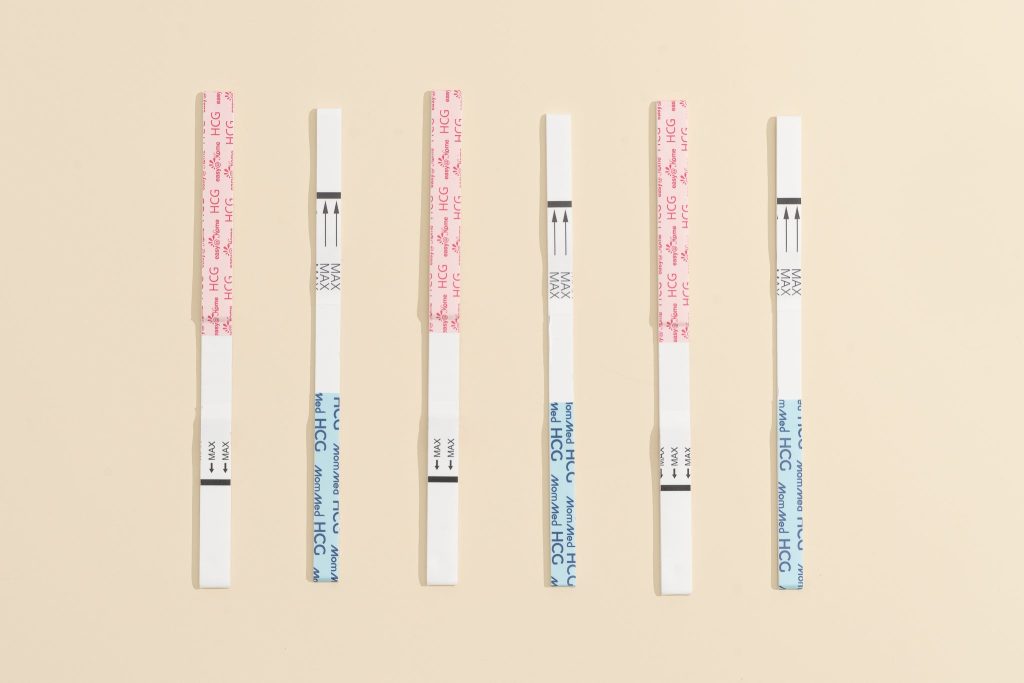
Urine Test (Home Pregnancy Test):
Preparation:
Read the instructions carefully before beginning.
Gather the test kit, a timer, and a clean container if you need to collect urine first.
Collecting the Sample:
Either hold the test stick in your urine stream for a few seconds or collect urine in a cup and dip the test stick into the urine.
Waiting for Results:
Place the test stick on a flat surface and wait for the specified amount of time (usually 1-5 minutes).
Reading the Results:
Check the test window for the appearance of lines, symbols, or colors that indicate a positive or negative result as per the instructions.
Interpreting the Results:
A positive result typically shows two lines, a plus sign, or a change in color, indicating pregnancy.
A negative result typically shows one line or a minus sign, indicating no pregnancy.
Blood Test (Clinical Pregnancy Test):
Preparation:
Schedule an appointment with a healthcare provider.
Sample Collection:
A blood sample is drawn from a vein in your arm.
Laboratory Analysis:
The blood sample is sent to a lab to measure the level of hCG.
Waiting for Results:
Results are usually available within a few hours to a few days.
Interpreting the Results:
A positive result indicates pregnancy, while a negative result indicates no pregnancy.
Benefits:
Early Detection: Can detect pregnancy as early as the first day of a missed period or even before in some cases.
Convenience: Home urine tests are easy to use and provide quick results.
Accuracy: When used correctly, pregnancy tests are highly accurate in detecting hCG levels.
Reassurance: Provides reassurance and helps in early decision-making regarding pregnancy care.
Things to keep in mind:
Timing: For best results, take the test in the morning when hCG levels are highest in the urine.
Instructions: Follow the test instructions carefully to ensure accuracy.
False Results: False negatives can occur if the test is taken too early, while false positives are rare but possible.
Retesting: If the result is negative but you suspect you are pregnant, retest a few days later or consult a healthcare provider.
Medications: Certain medications and medical conditions can affect test results.
Alternatives:
Blood Test (Quantitative hCG Test): Measures the exact amount of hCG in the blood, providing more detailed information about the pregnancy.
Ultrasound: An imaging test that can confirm pregnancy and check the development of the fetus, usually performed a few weeks into the pregnancy.