Notice: Function Elementor\Core\Experiments\Manager::warn_removed_or_hidden_dependency was called incorrectly. Feature mega-menu depends on hidden experiment nested-elements. Please see Debugging in WordPress for more information. (This message was added in version 4.3.4.) in /home/jacksonuc/public_html/wp-includes/functions.php on line 6260 Urine Analysis – Jackson Urgent CareSkip to content
Urine analysis, commonly known as urinalysis, is a diagnostic test used to evaluate various components of urine. It helps in diagnosing a wide range of conditions, including urinary tract infections (UTIs), kidney disease, diabetes, and other metabolic disorders.
What is it?
Urine analysis is a comprehensive test that examines the physical, chemical, and microscopic properties of urine. It is a routine diagnostic tool used to detect abnormalities in the urine that may indicate different medical conditions.
What happens
during the procedure:
The process of conducting a urine analysis involves the following steps:
Preparation:
No special preparation is generally required, but it is best to inform your healthcare provider about any medications or supplements you are taking, as they can affect the results.
It is recommended to collect the first urine of the day, which is more concentrated and can provide more accurate results.
Sample Collection:
The patient is provided with a sterile container to collect a urine sample.
A midstream clean-catch method is often recommended to avoid contamination: begin urinating, then collect the urine sample midstream.
Physical Examination:
The urine sample is first examined for its physical properties, such as color, clarity, and odor.
Chemical Analysis:
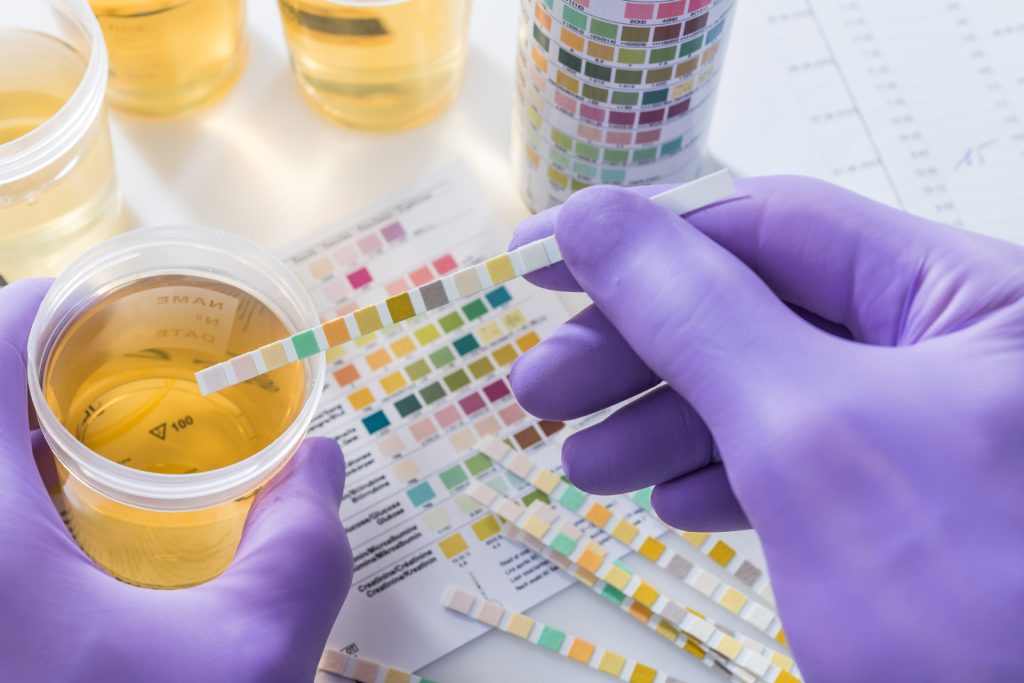
The urine sample is tested using a dipstick, a thin plastic strip treated with chemicals. The dipstick is dipped into the urine, and the resulting color changes are compared to a standard chart. This checks for:
pH: Indicates the acidity or alkalinity of the urine.
Specific Gravity: Measures urine concentration.
Protein: High levels may indicate kidney disease.
Glucose: High levels can indicate diabetes.
Ketones: Presence may suggest uncontrolled diabetes or other metabolic conditions.
Blood: Can indicate infection, kidney stones, or other conditions.
Leukocytes and Nitrites: Suggests a possible UTI.
Bilirubin and Urobilinogen: May indicate liver disease.
Microscopic Examination:
A small amount of urine is examined under a microscope to identify cells, crystals, bacteria, and other substances. This can help detect:
Red and White Blood Cells: Indicates infection, inflammation, or bleeding in the urinary tract.
Bacteria or Yeasts: Suggests infection.
Casts: Tube-shaped proteins that can indicate kidney disease.
Crystals: May indicate kidney stones or a metabolic problem.
Benefits:
Non-Invasive: Simple, non-invasive test that can provide a wealth of information about a person’s health.
Quick Results: Results are often available quickly, sometimes within minutes for the dipstick part of the test.
Wide Range of Information: Helps diagnose various conditions, including infections, kidney disease, and diabetes.
Routine Screening: Can be part of regular health check-ups to monitor overall health.
Things to keep in mind:
Sample Contamination: Proper collection methods are crucial to avoid contamination and inaccurate results.
Diet and Medications: Some foods and medications can affect urine color and composition. Inform your healthcare provider of any substances you are taking.
Follow-Up: Abnormal results often require further testing or evaluation to determine the exact cause of the abnormalities.
Hydration Levels: Dehydration or overhydration can affect test results, particularly specific gravity and concentration.
Alternatives:
Blood Tests: Provide information about kidney function, glucose levels, and other parameters that can complement urine analysis.
Imaging Tests: Ultrasound, CT scans, or MRI may be used to look at the kidneys and urinary tract if abnormalities are found.
Urine Culture: Specifically used to detect and identify bacteria causing a urinary tract infection and determine the best antibiotic for treatment.